



An Ayurvedic Home Care Routine to Live Stress-Free
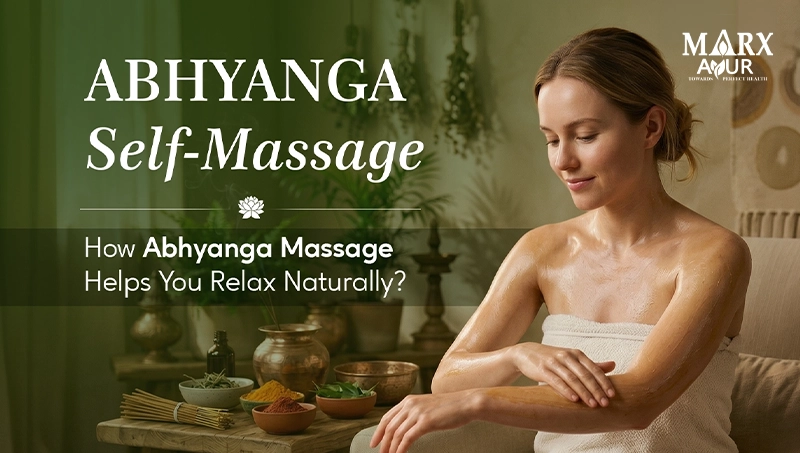
Modern routines keep the body alert long after the day ends. Abhyanga self-massage creates a softer pause. Warm oil against the skin changes the pace of the evening and encourages the nervous system to settle naturally.
This traditional ayurvedic oil massage is less about pressure and more about presence. The steady touch helps reduce stress while restoring the sense of calm you crave.
What Is Abhyanga Self-Massage?
Abhyanga self-massage is the practice of applying warm medicated oil to the body through intentional strokes. Ayurveda prescribes it as a foundational morning ritual for lasting health.
This oil application can either be performed by a practitioner or by yourself. Even fifteen minutes of Abhyanga daily can have surprising effects on both your muscle stiffness and emotional fatigue.
Why Abhyanga Self-Massage Feels So Relaxing?
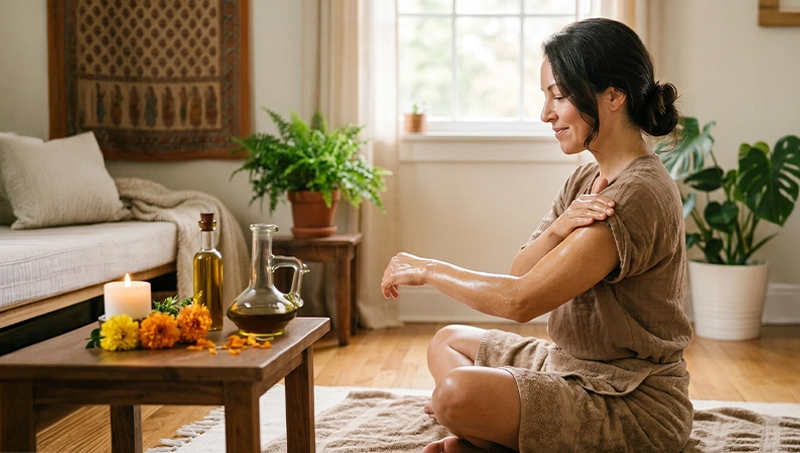
The relaxation following an ayurvedic self-massage abhyanga session is not just muscular. Warm abhyanga oil massage slows down the sympathetic nervous system, the part of brain that stays on alert. Once that settles, everything else tends to follow. Studies have observed measurable reductions in heart rate and blood pressure after oil massage, and practitioners have documented this for centuries before any study confirmed it.
There is also something about touch itself. Applying oil with genuine attention to your own body is a form of care most people rarely give themselves.
A Beginner’s Guide to Abhyanga Self-Massage
- Warm the oil before you begin
Cold oil on skin does very little. Gently heating your ayurvedic oil massage base for a minute or two changes everything, improving absorption and signalling the body to soften before a single stroke is made.
- Start at the scalp, work downward
Classical abhyanga self-massage instructions begin at the crown of the head. Long strokes down the limbs and circular movements over joints and the abdomen follow the direction of natural circulation and lymphatic flow.
- Use long strokes on limbs, circular on joints
For your arms and legs, massage in the direction of hair growth, with long strokes. Joints like knees, elbows, hips, and shoulders work best under circular strokes, as they require greater penetration due to their increased tension.
- Let the oil sit for at least ten minutes
This is the step most beginners miss. The oil needs time to penetrate the deeper tissue layers. Wiping it off immediately defeats much of the therapeutic purpose of ayurvedic self-massage abhyanga.
- Follow with a warm shower, not a bath
Running water washes away surface residue while leaving the absorbed oil in the tissues where it belongs. A bath pulls more oil out than is ideal. Warm, not hot, water also prevents the body from swinging back into an agitated state.
Self-Massage Tips for Better Relaxation
- Set a consistent time
The body responds to rhythm. Doing your self-massage at the same time each morning or evening, even briefly, builds a cumulative effect that a one-off session never quite replicates.
- Use enough oil
A common mistake is being too cautious with quantity. The skin needs genuine coverage to allow the oil to work. Dry patches mean areas of the body are not receiving the treatment they need.
- Pay attention to the feet
Foot massage is considered particularly powerful in Ayurveda for calming the nervous system. A few minutes of slow, thorough work here before sleep can meaningfully reduce stress carried through the day.
- Breathe slowly while you work
The physical action and the breath work together. Rushed breathing keeps the body in a mild stress response regardless of what your hands are doing. Slow, full breaths deepen the relaxation considerably.
- Warm the room if possible
Cold environments work against the oil. A warm bathroom means the pores stay open, absorption is better and the experience itself is far more restorative.
- Be consistent before expecting results
A single session is pleasant. Seven days in a row is when things shift. People who report meaningful changes in sleep, muscle stiffness and mood almost always practised regularly rather than occasionally.
Choosing the Right Oil for Abhyanga Self-Massage
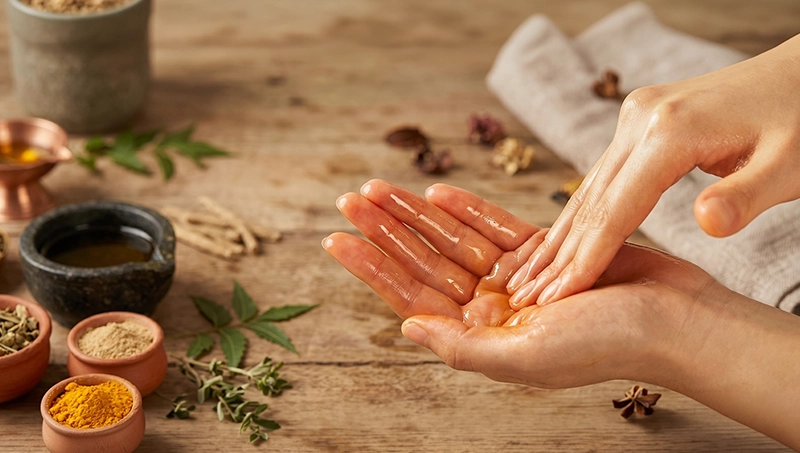
The right oil depends on skin texture, body sensitivity and how the nervous system feels daily. Some oils feel grounding while others feel cooling. An Ayurvedic consultation may help identify wellness practices suited to your lifestyle.
- Sesame Oil: This is the most common carrier oil in Classical Ayurvedic Medicine. Highly warming, penetrating fast, it can help reduce muscle stiffness and calm those with Vata dosha who tend to be anxious or restless.
- Coconut Oil: Inherently cooling and thus making it ideal for Pitta dosha people or summer season use. Excellent for promoting healthy skin and easy to absorb without feeling heavy.
- Sunflower Oil: A lighter option that works well for Kapha types or anyone who finds sesame too rich. It supports circulation and is a reasonable everyday choice for abhyanga oil massage.
- Mustard Oil: Intensely warming and stimulating. Used in traditional practice to improve circulation and encourage lymphatic drainage massage effects. Not for everyone, but very effective when appropriate.
- Medicated Herbal Oils: Prepared by infusing specific Ayurvedic herbs into a carrier base over extended periods. These are what professional practitioners use and carry the most targeted therapeutic value.
FAQs
Is Abhyanga self-massage good for busy lifestyles?
Yes, A daily self-massage session runs under twenty minutes and builds real cumulative benefit. Consistency matters more than duration.
Can self-massage help reduce stress naturally?
Ayurvedic Abhyanga self massage affects the nervous system in such a way that it can decrease production of the stress hormone cortisol thereby returning the body to its natural balanced state. As with any Ayurvedic oil massage, one will experience positive effects from regular practice.
Why do people use Abhyanga self-massage for relaxation?
Warm oil, soothing massage strokes and the massage oil’s medicinal properties all work together to create the most profound relaxation for the body and mind. While relaxation by means of distraction can be fleeting, Abhyanga brings about a deep calm that pervades the body and allows it to return to a state of balance and stability.
Can Ayurvedic self massage help stress relief?
Ayurvedic self massage abhyanga is traditionally practised to calm physical exhaustion and emotional restlessness. The repetitive touch combined with warm oil often creates a steadier feeling throughout the body after long demanding days.
Is Abhyanga self-massage part of a healthy wellness routine?
Daily abhyanga self-massage is prescribed alongside proper sleep and diet as one of the core practices for maintaining physical and mental balance. Those with specific health concerns may benefit from combining it with professional Ayurvedic therapies such as Shirodhara or Pizhichil, guided by a qualified practitioner.
Which oil is best for Abhyanga self-massage?
Sesame oil is traditionally used as a standard option. People with sensitive or heat-prone skin tend to prefer coconut oil better. An ayurvedic consultation will give you a more precise answer after a proper assessment of your body.