




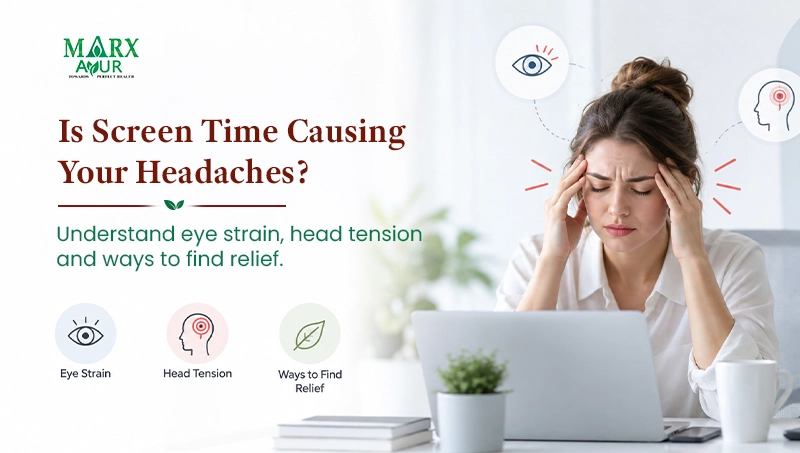
You finish a long day on your laptop, switch to your phone, and notice that your eyes feel tired. Soon, you may feel pressure across your forehead or discomfort above your eyes. Could prolonged screen use be contributing to the headache?
With so much time spent on digital devices, eye strain headache is a common concern. Prolonged visual concentration, reduced blinking, screen glare, poor posture, stress and fatigue may all contribute to eye discomfort and head tension. However, not every headache is caused by eye strain, so recurring or unusual symptoms should not be ignored.
Can Eye Strain Cause Headaches?
Yes, eye strain can occur alongside headaches, particularly after extended periods of close visual work. Reading small text, focusing continuously on a screen and using digital devices without breaks can leave the eyes feeling tired.
Other factors can also contribute. Poor posture may increase neck and shoulder tension, while stress and fatigue can contribute to tension and stress headaches.
What Is an Eye Strain Headache?
An eye strain headache generally refers to head discomfort experienced alongside visual fatigue or eye discomfort. You may feel pressure around the forehead, temples or experience headaches over the eye.
Other symptoms can include dry eyes, blurred vision and difficulty focusing. Eye discomfort and headache are not necessarily the same thing, but they can occur together after prolonged visual concentration.
What Causes Eye Strain Headaches?
Prolonged Screen Time
Long periods on laptops, phones and tablets without breaks can increase visual fatigue. Continuous concentration, especially when reading small text, may contribute to headaches from screen use or headaches due to screen time.
Dry and Tired Eyes
People tend to blink less when concentrating on screens. Reduced blinking can contribute to dryness and irritation, adding to the pain from eye strain.
Screen Glare and Poor Lighting
Reflections, glare and unsuitable screen brightness can make viewing more uncomfortable. Poor lighting can also increase the effort required to see the screen clearly.
Poor Posture and Neck Tension
Leaning towards a laptop or holding a phone at an uncomfortable angle can place strain on the neck and shoulders. This tension may contribute to head discomfort.
Stress and Fatigue
Long working hours, mental fatigue and everyday stress can contribute to headaches. In some people, these factors may occur alongside eye discomfort.
Signs and Symptoms of Eye Strain
Common symptoms include:
- Tired or heavy eyes
- Dry or irritated eyes
- Burning sensation
- Blurred vision
- Difficulty focusing
- Light sensitivity
- Headache around the forehead or temples
- Headaches over the eyes
- Neck and shoulder tension
- General visual discomfort
Symptoms can vary from person to person.
Eye Strain Headache vs Migraine: What’s the Difference?
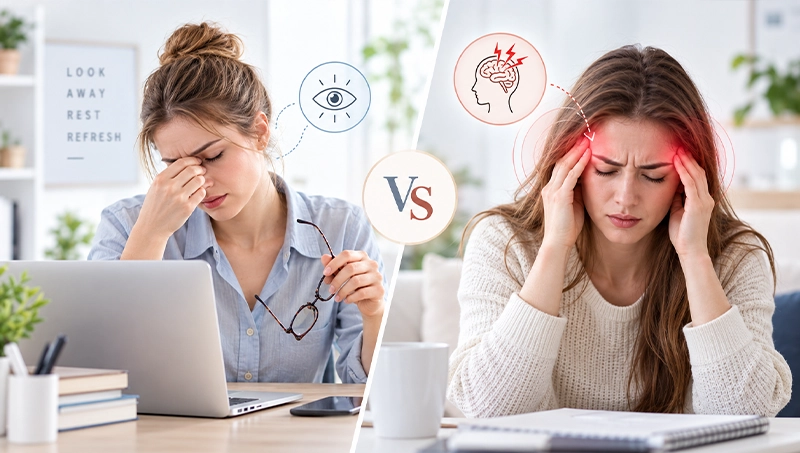
An eye strain, headache and migraine should not automatically be considered the same condition. Eye strain is commonly associated with visual fatigue, dryness and prolonged concentration.
Migraine is a neurological condition with its own pattern of symptoms and triggers. While some people may notice headaches after screen exposure, this does not necessarily mean they have an eye strain migraine or a migraine caused by eye strain. Recurring, severe or unusual headaches should be assessed by an appropriate healthcare professional.
Why Do I Get Headaches After Looking at Screens?
Several factors may contribute to headaches from screen use, including:
- Prolonged visual concentration
- Reduced blinking
- Dry or tired eyes
- Screen glare
- An uncomfortable viewing position
- Neck and shoulder tension
- Stress and mental fatigue
- Insufficient breaks
Identifying which factors affect you can help you make practical changes.
How to Relieve an Eye Strain Headache?

Follow the 20-20-20 Rule
Every 20 minutes, look at something around 20 feet away for at least 20 seconds. This gives your eyes a short break from continuous close-up focusing.
Take Regular Screen Breaks
Step away from your screen regularly rather than waiting until your eyes feel exhausted. Short breaks are particularly useful during long periods of computer work.
Adjust Screen Settings
Reduce glare and reflections, adjust brightness to a comfortable level and increase text size if needed. Position your screen so you do not have to lean forward to read.
Maintain Good Posture
Keep your head, neck and shoulders comfortable. Position your screen at a suitable height to reduce unnecessary neck strain.
Rest Your Eyes
Adequate sleep, hydration and sensible screen habits can support overall comfort. Avoid unnecessarily prolonged screen sessions when you are already experiencing discomfort.
Consider an Eye Examination
If symptoms persist, recur frequently or occur with vision changes, an eye examination may help identify whether vision correction or another eye-related factor needs attention.
When Should You See a Doctor or Eye Specialist?
Not every headache is caused by eye strain. Seek professional assessment for:
- Persistent or recurring headaches
- Sudden or severe headaches
- Persistent blurred or double vision
- Significant eye pain
- New or unexplained vision changes
- Symptoms that do not improve after reducing screen exposure
- Headaches accompanied by other concerning symptoms
How Does Ayurveda Approach Eye Strain and Head Tension?
Ayurveda takes an individualised approach that considers factors such as daily routine, stress, mental fatigue, sleep and overall wellbeing.
Rather than choosing a therapy based only on the presence of a headache, an Ayurvedic practitioner can assess your symptoms and lifestyle before recommending appropriate care.
Ayurvedic care should be practitioner-guided and should not replace medical or eye care when professional assessment is required.
Ayurvedic Therapies for Screen-Related Headaches and Tension
Shirodhara
Shirodhara is a traditional Ayurvedic therapy in which warm medicated oil is gently poured over the forehead in a controlled manner. It may be considered as part of personalised Ayurvedic care where relaxation, mental fatigue or head tension are relevant concerns.
Nasyam / Nasya
Nasyam, or Nasya, involves the traditional nasal administration of medicated preparations. An Ayurvedic practitioner may consider it when particular head or nasal symptoms are present.
It should not be presented as a direct treatment for digital eye strain. Practitioner assessment is important before choosing this therapy.
Indian Head Massage
Indian Head Massage involves massage of the head and scalp, with attention that may also include the neck and shoulders. It may be considered when prolonged screen use is accompanied by muscular tension and a need for relaxation.
Book an Ayurvedic Consultation
If heavy screen days are leaving you with tired eyes, head tension or recurring discomfort, speak with an Ayurvedic practitioner about your concerns.
Book an Ayurvedic Consultation with Marx Ayur to explore personalised, practitioner-guided Ayurvedic care.