

Long screen hours and a late tea after the commute might be throwing off both your sleep pattern and digestion. Ayurveda sees this as an imbalance that Panchakarma treatment aims to settle through personalised cleansing and renewal after a practitioner’s assessment.
What Is Panchakarma Treatment?
The name comes from Sanskrit and means ‘five actions’. Ancient traditions used these therapeutic methods to clear accumulated stress and physical sluggishness
- It falls under the category of shodhana, which is concerned with the cleansing processes of the body.
- The purpose of Panchakarma treatment is the regulation of three doshas: Vata, Pitta and Kapha.
- An Ayurvedic doctor develops the treatment plan based on your current health status and constitution.
What Are the Five Panchakarma Therapies?
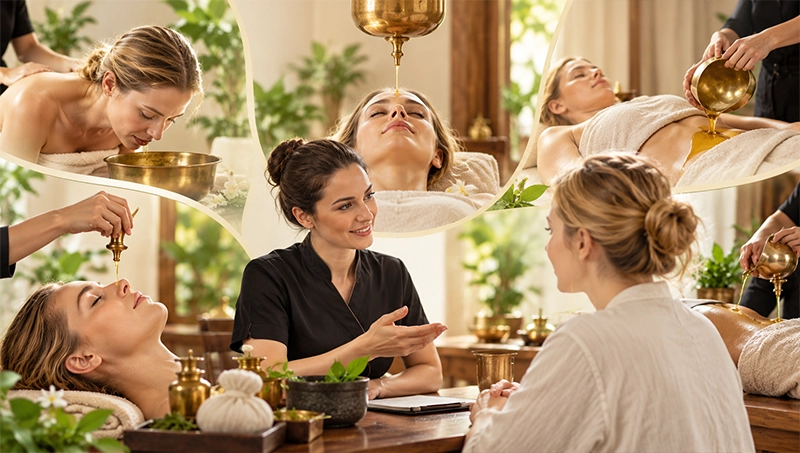
Classical texts describe five main procedures. But not everyone requires all these procedures, so a thorough initial assessment is important.
- Vamana: Therapeutic emesis traditionally linked with Kapha. Offered only in carefully selected cases.
- Virechana: A mild herbal purgation intended to calm Pitta heat in your gut.
- Basti: Enema procedure involving medicinal oils or herbal concoctions. According to classical scripts, this procedure is highly effective for Vata.
- Nasyam: Herbal oil instilled into the nostrils for the treatment of stress, headaches and sinuses.
- Raktamokshana: A traditional form of bloodletting that is rarely practised today.
What Are the Benefits of Panchakarma?
The advantages of Panchakarma relate to the process of cleansing and restoration of the body and mind.
- One of the major effects of Panchakarma is a calm mind.
- Sleep comes much easier once the mind has relaxed.
- Deep relaxation brought about by warm oil therapies tends to last long after the therapy session.
- Digestion and appetite often feel more regulated towards the end of the Panchakarma programme.
- It is easy to stick to the routine once you start practising for weeks.
Panchakarma is performed as a complementary therapy that helps you feel rested and more in tune with healthy habits. It is neither a medical cure nor should it be seen as an anti-ageing fix or a way to lengthen life span.
How Does Panchakarma Treatment Work?
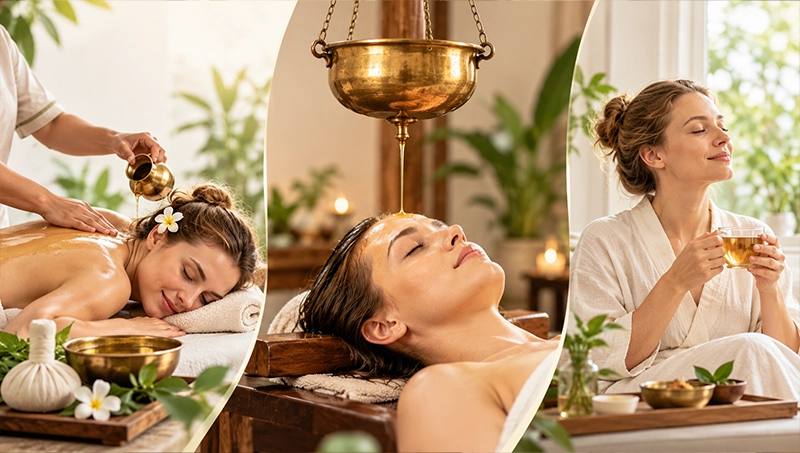
There is a clear rhythm to Panchakarma: preparation leads into the main therapies, and recovery follows. Timings and specifics are set around your assessment.
- Preparation (Purvakarma): Oil massage and herbal steam prepare the body for what comes next. Some plans include medicated ghee taken over a few days.
- Main procedures (Pradhanakarma): Performing the selected cleanse detox therapies under a qualified ayurvedic practitioner’s supervision.
- Recovery (Paschatkarma): Food intake returns to normal step by step with practitioner advice to follow at home.
Is Panchakarma a Detox Treatment?
The word ‘detox’ can be confusing because modern trends and traditional Ayurveda define it differently.
- In Ayurvedic philosophy, metabolic waste or undigested matter is referred to as Ama.
- Balancing doshas and clearing ama are the main targets of Panchakarma.
- Unlike popular cleanse detox routines involving juices or fasts, this approach requires close practitioner supervision.
Panchakarma is a traditional Ayurvedic cleansing process focused on internal balance, distinct from the popular concepts around detox.
Is Panchakarma Suitable for Everyone?
Panchakarma may not suit everyone, as specific stages require relatively high physical endurance.
- Age and physical strength matter.
- Pregnancy or recent surgery typically rules out certain therapies.
- Heart conditions and bleeding disorders require thorough evaluation.
- Personal commitments and stress levels affect whether starting care now makes sense.
Why Is an Ayurvedic Consultation Important?
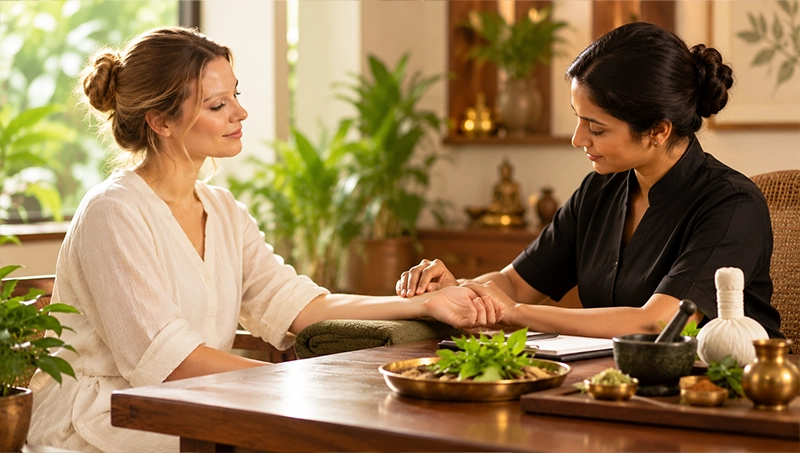
A consultation is essential because it is where your doctor designs your custom treatment plan, ensuring every phase is safe and right for your body.
- An Ayurvedic practitioner looks at your unique body type, digestion process, sleep patterns, and stress level in order to get the full picture.
- Expect a pulse reading alongside simple questions regarding daily routine and habits.
- Reviewing health history and current GP prescriptions supports safe treatment planning.
- The consultation outcome can vary from a complete Panchakarma procedure to just one therapy or diet changes.
What Does Practitioner-Led Panchakarma Look Like in the UK?
Panchakarma care in the UK combines traditional methods with a schedule that fits around everyday routines.
- Progress guides the plan, so adjustments happen naturally throughout the process.
- Qualified practitioners follow authentic Kerala-based methods with traditional herbal oils.
- Costs are usually confirmed after consultation once the protocol is clear.
- Ayurvedic therapy acts as a supportive option to standard medical care without replacing a GP.
Wondering whether Panchakarma is right for you?
The Ayurvedic doctors at Marx Ayur will listen first and talk you through the suitable options clearly.