



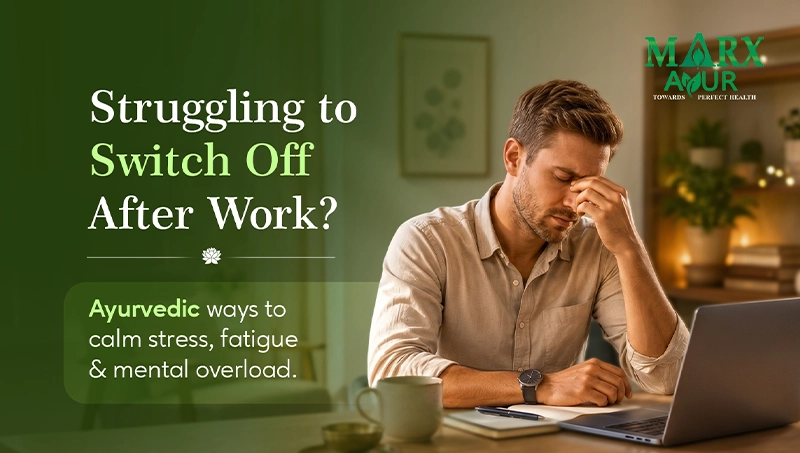
The emotional exhaustion that settles in by Thursday afternoon, the fatigue you carry home and the sleep that never really feels like rest are not minor complaints. Ayurveda treats them as signals of nervous system overload and offers proven therapeutic practices to keep you calm and energetic.
Why Workplace Stress Is Increasing Among Professionals Today?
Long working hours have become normalised in many industries and screen fatigue has become a near-universal experience for anyone desk-bound through the day. Constant notifications have made it genuinely difficult to switch off between tasks. Work pressure is following people beyond the office into their homes. Poor work-life balance is a structural reality for a growing number of professionals today, and the scary part is that your body is getting used to it and can’t really slow down when you are supposed to rest.
Signs Your Body Is Experiencing Stress & Mental Fatigue

- Headaches: That dull pressure behind the eyes or near the neck often builds quietly after long mentally demanding days.
- Poor Sleep: You feel exhausted at night yet your mind refuses to properly shut down when you really need that rest.
- Neck Stiffness: Screen-heavy routines and held posture create tightness that lingers long after work is finished.
- Brain Fog: You’ll struggle to process even simple ideas when your nervous system has been running without proper recovery.
- Irritability: When stress stays unresolved for too long even small situations can start feeling emotionally draining.
- Emotional Exhaustion: Some days it feels less like tiredness and more like having nothing mentally left to give.
- Body Heaviness: Stress fatigue often shows up as a strange physical heaviness that rest alone does not fully shift.
How Ayurveda Views Stress & Mental Overload?
What most people call stress, Ayurveda reads as the body losing its internal rhythm. Emotional imbalance is hard to manage because the system has no real space to recover between demands. An overstimulated nervous system is not good for sleep or digestion and creates physical tension that builds without obvious warning. Thus, you reach a stage where the mind cannot fully rest even when the body is still. As per Ayurveda, the body needs more than a break for effective stress management at work. It needs to be genuinely restored to its original balance.
Ayurvedic Therapies That May Help Reduce Workplace Stress

- Shirodhara: A steady stream of warm herbal oil flows across the forehead to quiet an overactive mind. Many people notice a rare sense of mental stillness after the therapy ends.
- Abhyanga: This full-body Ayurvedic oil massage uses medicated oils selected for your body type. It helps release physical fatigue while encouraging the nervous system to slow down naturally.
- Kizhi: Warm herbal bundles are applied with rhythmic pressure to areas holding deep muscular strain. Kizhi is often chosen when stress begins showing up more in the body than the mind.
- Pizhichil: Streams of warm medicated oil move continuously across the body while therapists perform massage techniques simultaneously. The treatment feels deeply grounding when long-term stress has left the body depleted.
Ayurvedic Self-Care for Busy Workdays
Small, consistent habits matter as much as any formal treatment. Principles of stress management in Ayurveda also suggest the following self-care practices that work well within a working week.
- Mindful Breaks: Step away from the screen without your phone. Even five minutes of complete mental break can disrupt the cycle of constant stimulation.
- Warm Meals: The cold, hurried meal is difficult to digest, especially when under stress. Eating a warm, healthy meal at a consistent time will make a much bigger impact on stability than any supplement.
- Consistent Sleep Routine: Going to sleep around the same hour every day helps the nervous system get ready for sleep. What counts here is consistency.
- Screen Detox Habits: Avoid all screens for at least thirty minutes prior to going to sleep. Your nervous system needs the chance to transition into relaxation mode.
- Breathing Practices: Try taking a moment to breathe slowly and mindfully several times during your working hours. This actively reduces the stress response.
- Self-Care Rituals: Take a few minutes to give yourself a massage with warm oil before your shower or just spend quiet time in contemplation. This will signal the nervous system that the day’s demands are over.
FAQs
Why do I feel mentally exhausted after work?
This occurs due to prolonged periods of brain activity without proper relaxation. Stress management at work rarely accounts for the continuous decision-making, screen exposure and emotional pressure between tasks. Even when work is done, the brain remains active and that’s why you feel tired but still can’t relax in any way.
Can work stress affect sleep and energy?
It certainly does. Since work stress leaves the nervous system in a constant excited state, falling asleep becomes almost impossible. Lack of good sleep leads to stress fatigue, and this cycle never stops. Ayurvedic treatment for stress addresses this cycle from both ends rather than treating sleep and energy as separate problems.
Why does stress make my body feel heavy?
Stress in Ayurveda is known to throw off natural body balance, causing a toxin buildup both physically and mentally. The heaviness you feel is a real physiological response resulting from cortisol secretion, muscle tension and reduced blood flow. Ayurvedic stress relief revolves around cleansing your body of the built-up toxins using oils and mindful self-care practices.
What are the signs of workplace burnout?
One suffers from burnout when there are signs of exhaustion, loss of productivity, and detachment from the job. Some physical symptoms can include heaviness in your body, constant fatigue and inability to have quality sleep. If brain fog, irritability, and anxiety also accompany these symptoms, you should start paying attention to it.
Can Ayurvedic therapies help burnout recovery?
Yes, especially the therapies such as Shirodhara and Abhyanga are effective in burnout recovery. What makes Ayurvedic therapies different from other approaches to corporate stress management is that they treat both the body and the mind simultaneously as opposed to just addressing symptoms separately.
How do I relax after long working hours?
Warm water, a warm meal and a break from screens form a simple foundation. For deeper recovery, natural remedies for brain fog and body tension such as Ayurvedic oil massage have a measurable effect on how quickly the nervous system settles after a demanding day. If stress fatigue has become a pattern rather than an occasional experience, an ayurvedic consultation is a worthwhile next step.